Authentic sailing experience
Feel the power of wind in the sails and take part in a real sea adventure – without commercial gimmicks and crowds of tourists.

Dubrovnik, Croatia – Venice, Italy
Why choose a Tall Ship cruise?
I want to set sail →Feel the power of wind in the sails and take part in a real sea adventure – without commercial gimmicks and crowds of tourists.
Immerse yourself in a world where time flows slower, and the only sound is the rush of waves and the crack of lines.
Whether you have sailing experience or are taking your first steps on deck – you'll find a cruise tailored to your expectations and abilities.
From short Baltic cruises to multi-week transatlantic voyages. Choose a cruise that fits your rhythm and dreams.
When Venice still ruled the Adriatic, Dubrovnik was an important maritime republic and the floating city's chief rival. Dubrovnik proudly calls itself the "Pearl of the Adriatic" and its fortress is one of the best preserved in Europe. As you walk around the imposing walls of the old town, you can look out across two seas – the deep blue Adriatic and a sea of red roof shingles. The old town, with its beautiful squares, magnificent boulevards and narrow winding alleyways, is a UNESCO World Heritage Site.
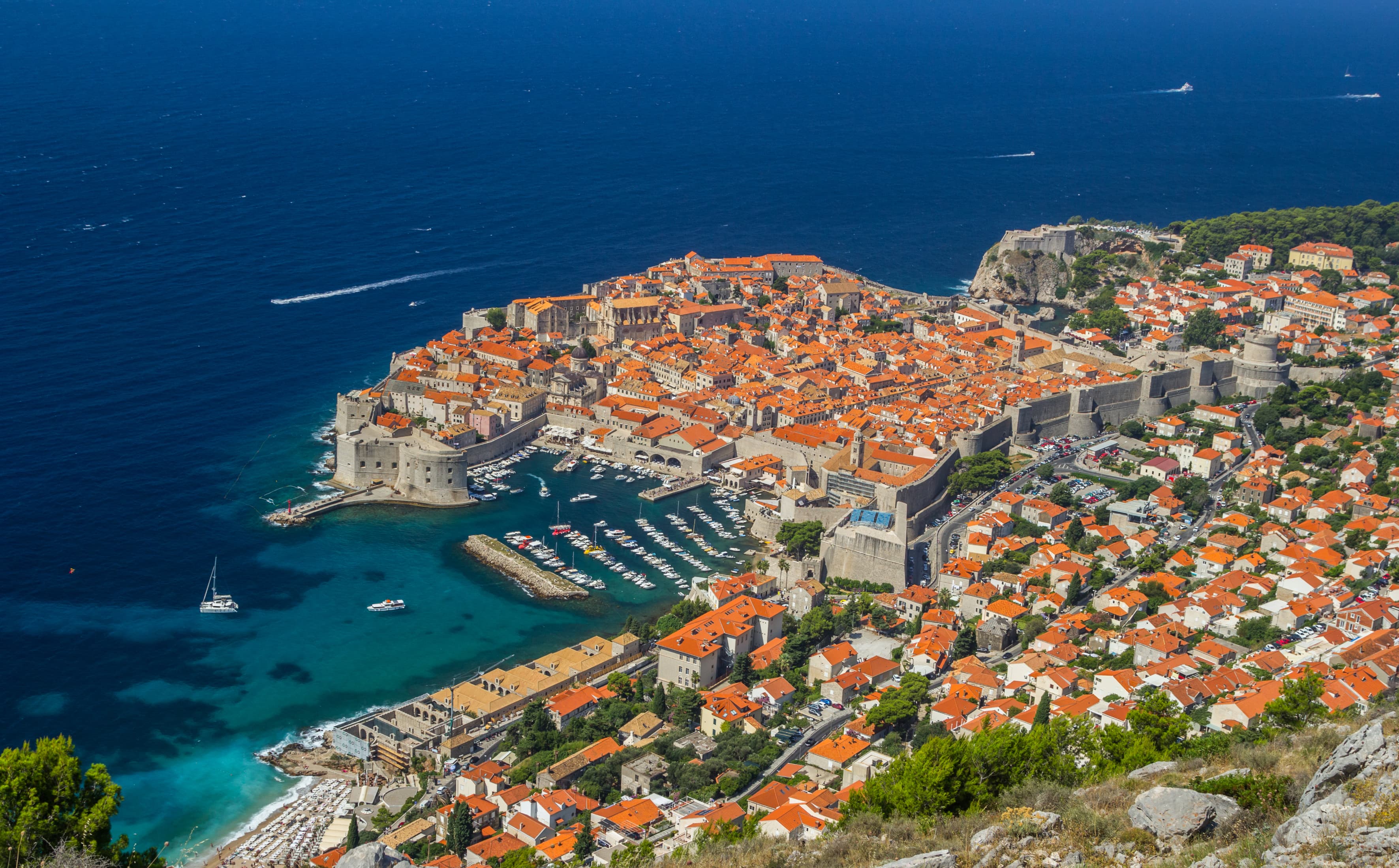
Approaching Dubrovnik by ship, you are greeted by a dramatic stretch of rocky Adriatic coast, green slopes, and the pale stone skyline of the city rising nearby. From the port, the famous walled old town lies a short distance away, offering grand sea views, historic streets, and the unmistakable atmosphere of one of the Mediterranean’s most striking harbours.
Approaching Dubrovnik by ship, you are greeted by a dramatic stretch of rocky Adriatic coast, green slopes, and the pale stone skyline of the city rising nearby. From the port, the famous walled old town lies a short distance away, offering grand sea views, historic streets, and the unmistakable atmosphere of one of the Mediterranean’s most striking harbours.
Approaching Dubrovnik by ship, you are greeted by a dramatic stretch of rocky Adriatic coast, green slopes, and the pale stone skyline of the city rising nearby. From the port, the famous walled old town lies a short distance away, offering grand sea views, historic streets, and the unmistakable atmosphere of one of the Mediterranean’s most striking harbours.
Komiza captivates with its charming fishing village allure. The picturesque alleys narrate a rich history, while the crystal-clear water glimmers invitingly. Here, tradition intertwines with natural beauty, creating an enchanting backdrop.
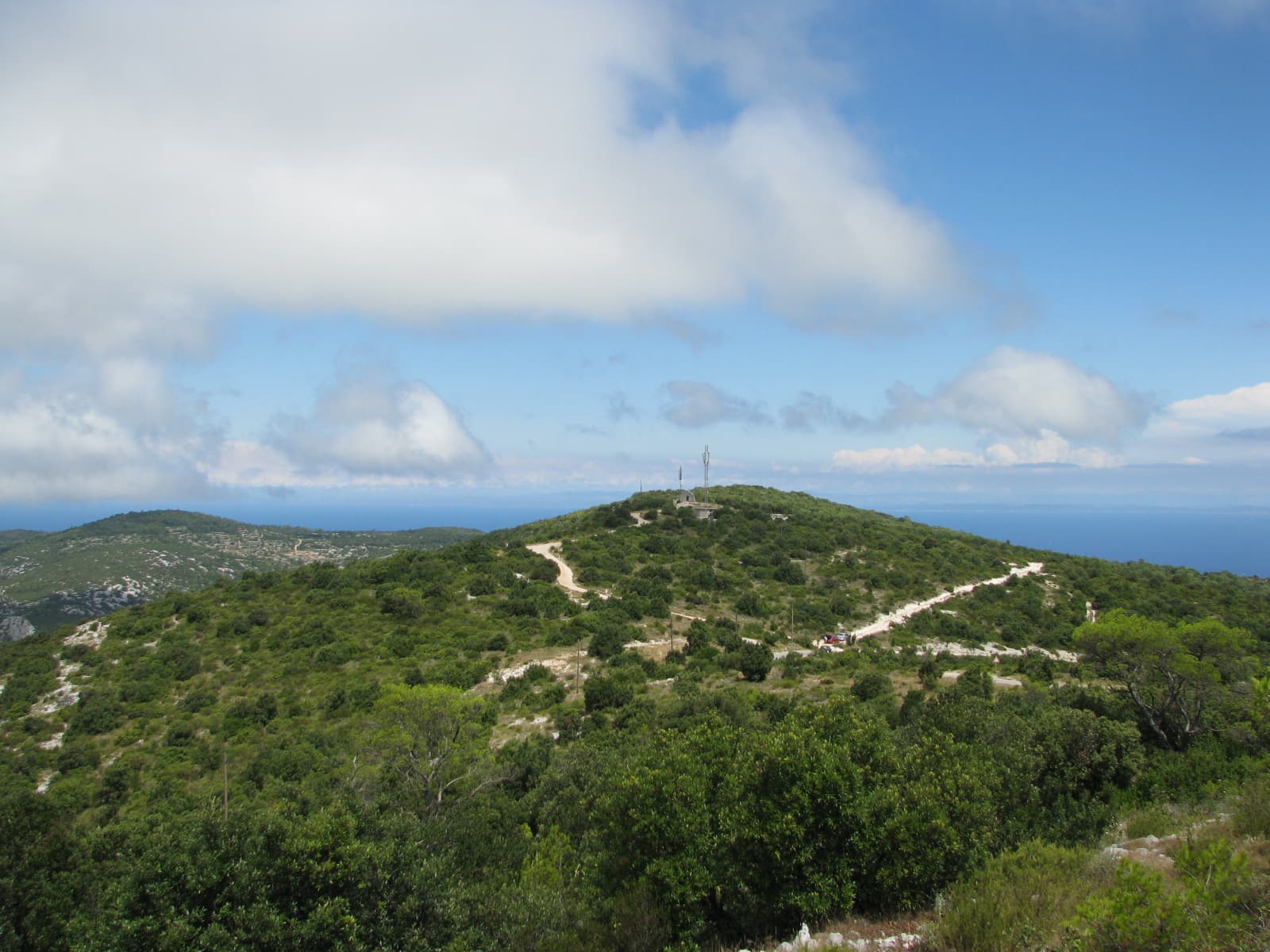
Arriving by ship at Vis, you are greeted by a sheltered Adriatic harbour framed by stone houses, low hills and clear blue water, with a calm, unhurried island atmosphere. Nearby, the waterfront town invites a stroll among old lanes, cafés and traces of Venetian character, while the rugged coast and coves beyond hint at the quieter side of Dalmatia.
The charming principal town of the small Central Dalmatian island of Hvar is picturesquely situated in a sheltered bay. Today, in the same spot where the Venetian fleet used to spend the winter and the proud republic of the Doges bequeathed its influence, yachts from all over the world bob about and transform this hotspot into the "St Tropez of Croatia". From the sea you can see the elegant harbor esplanade, the cathedrals with their distinctive bell towers, the old defensive walls and, towering above everything else, the medieval Spanjola fortress. The winding streets of the old town, with its many cafés, bars and restaurants around the lively main square trodden to a shine, have become a picturesque backdrop for today's sophisticated lifestyle.
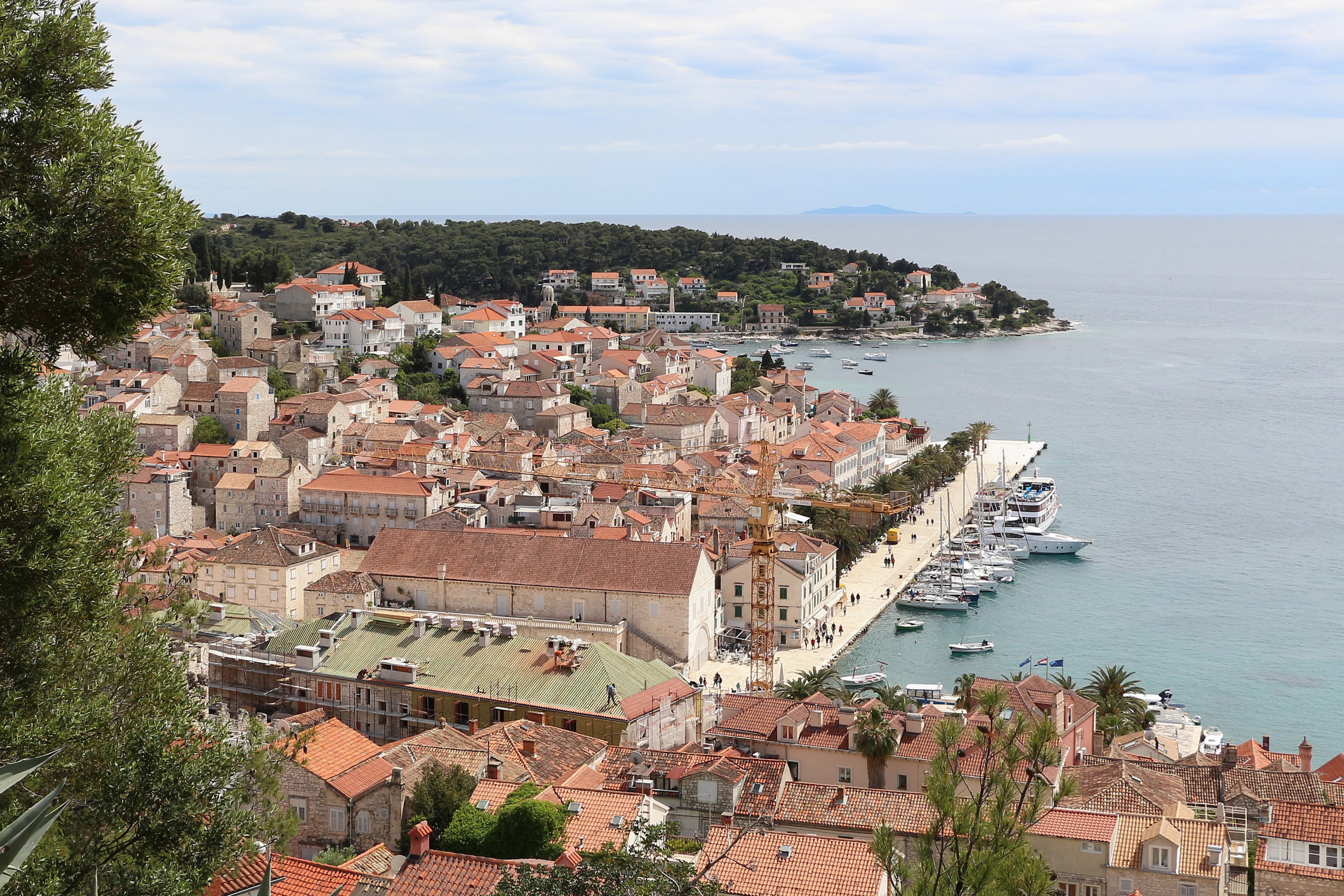
Arriving by sea, Hvar welcomes you with a bright Adriatic harbour, stone waterfront buildings and hills rising behind the town, giving the whole bay an elegant, sun-soaked feel. Nearby, you can stroll toward the old town’s lanes and squares, with views up to the hilltop fortress and out across the harbour to the Pakleni Islands.
Arriving by sea, Hvar welcomes you with a bright Adriatic harbour, stone waterfront buildings and hills rising behind the town, giving the whole bay an elegant, sun-soaked feel. Nearby, you can stroll toward the old town’s lanes and squares, with views up to the hilltop fortress and out across the harbour to the Pakleni Islands.
The Adriatic island of Korcula is one of the greenest in the region. Vineyards and olive groves stretch across rolling hills. The island's main town of the same name is protected by a city wall. It is one of the best-preserved medieval Mediterranean towns. Some buildings evoke the time when the maritime power of Venice ruled. Tintoretto is immortalised in the cathedral, and in one of the narrow streets you can search for the house where Marco Polo was born.
Arriving by sea, Korčula appears as a handsome Adriatic island town of stone houses, red roofs, and a waterfront backed by low green hills. From the port, the compact old town and its medieval walls are the obvious sights to explore nearby, with a relaxed Dalmatian atmosphere of narrow lanes, cafés, and boats moving across the channel.
When film crews search for a city location with charming alleys, a colossal fortress, and medieval charm, Trogir is often the number one choice. On the central Adriatic coast in Croatia, the Pearl of Dalmatia, as it’s known, is considered the best preserved Romanesque-Gothic complex in the whole of Eastern Europe. Its beautiful city center, located on a small island, also enchanted UNESCO, which made it a protected heritage site in 1997. Here, the Cathedral of St. Lawrence overlooks small alleys, palaces, patrician houses, and a sea of red-tiled roofs. Meanwhile, Trogir’s palm-lined waterfront is a modern place to stroll around and have a coffee with a view of sleek yachts.
Approaching Trogir by sea, you arrive on a sunny stretch of the Dalmatian coast, with marinas, low waterfront buildings and views toward the old town set a little away from the quay. Nearby, visitors can explore the UNESCO-listed historic center, a maze of stone lanes and church towers with a lively, Mediterranean atmosphere.
Rovinj lies on the western coast of Istria. The old town was built on a hill and was part of the Republic of Venice for over 500 years. St Euphemia's Basilica sits above the terracotta roofs in solitary splendour and its tower has become the town's landmark. A stroll through the winding lanes transports you straight into the Mediterranean lifestyle and the region's culinary delights. Istrian wines seem to embody the sun's rich heat, the oak forests conceal precious white truffles and the region's olive oil is among the finest in the world.
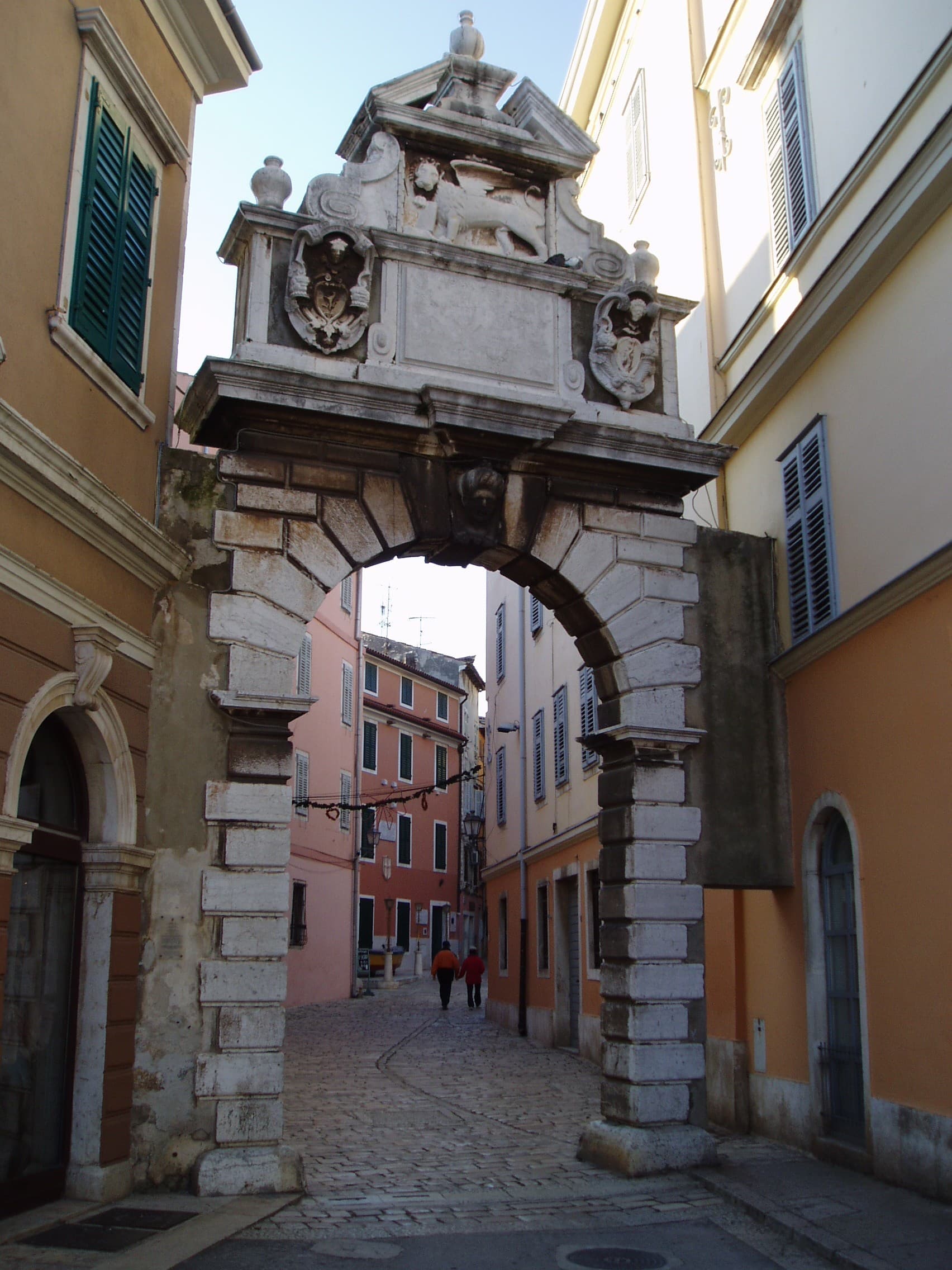
Arriving by sea, Rovinj stands out with its pastel old town rising above the waterfront and the hilltop church of St. Euphemia visible nearby. The harbour area has an easy Adriatic charm, with fishing boats, stone streets and a relaxed Istrian atmosphere just a short walk from the port.
The floating city of Venice sits on millions of wooden piles and more than 400 bridges cross 150 canals. No other city possesses such an abundance of stunningly beautiful churches, monasteries, palaces and artistic treasures, and nowhere else has plaster that crumbles so elegantly. Venice is a unique work of art and, with its lagoon, is a UNESCO World Heritage Site. The gateway to the city is probably the most magical of any in the world. Slowly and majestically you glide past the proud palaces along the Grand Canal and the Basilica di Santa Maria della Salute, giving you a long look at the fairytale setting of St Mark's Square with the Doge's Palace and Campanile.
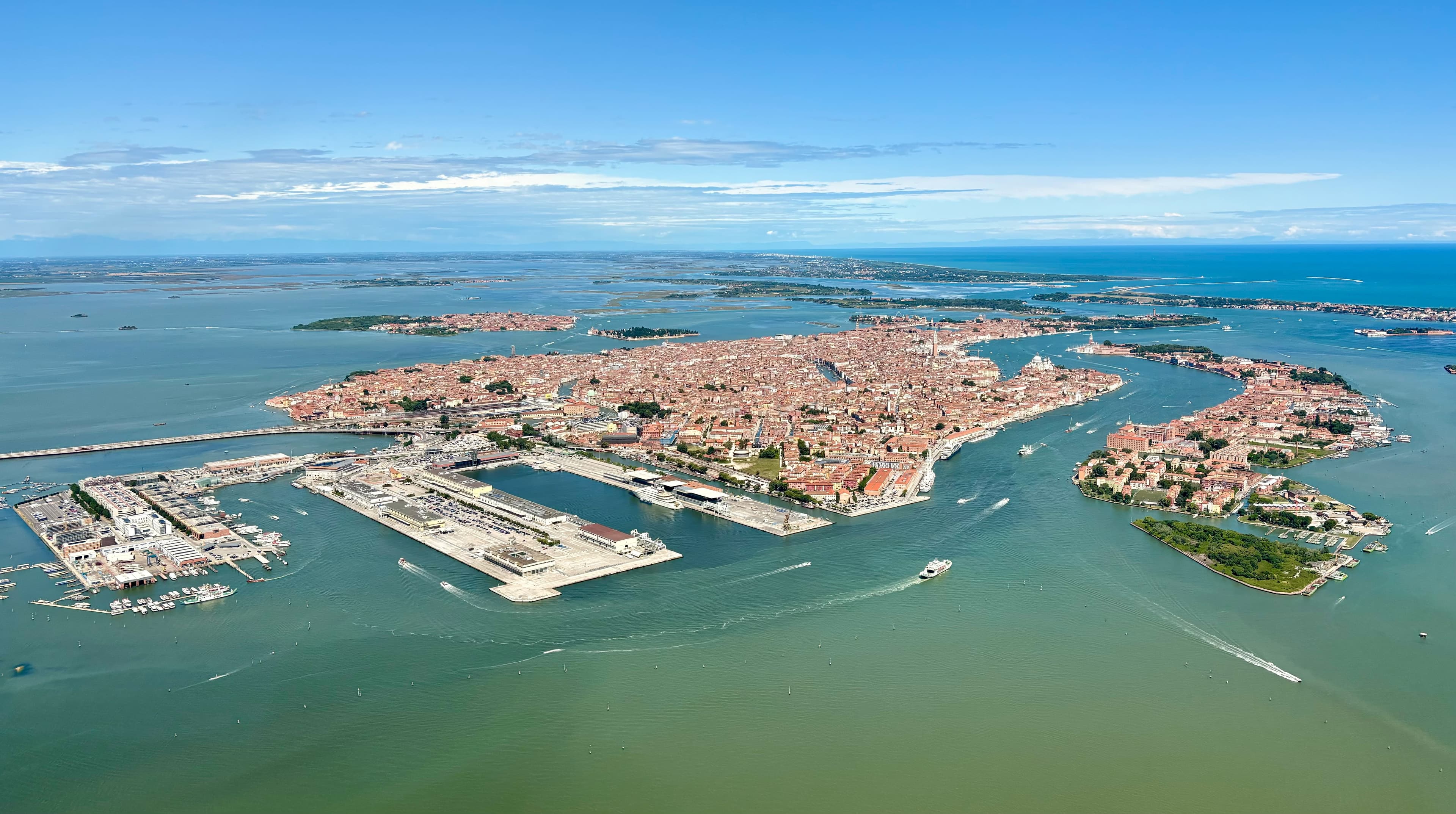
Arriving by sea, Venice feels unlike anywhere else: a low lagoon horizon, shipping channels, and islands scattered across the water before the city’s domes and bell towers appear in the distance. From the port, the historic center is nearby rather than at the quay, with canals, grand palaces, and famous squares waiting beyond the working harbour.
Approaching Dubrovnik by ship, you are greeted by a dramatic stretch of rocky Adriatic coast, green slopes, and the pale stone skyline of the city rising nearby. From the port, the famous walled old town lies a short distance away, offering grand sea views, historic streets, and the unmistakable atmosphere of one of the Mediterranean’s most striking harbours.
Arriving by ship at Vis, you are greeted by a sheltered Adriatic harbour framed by stone houses, low hills and clear blue water, with a calm, unhurried island atmosphere. Nearby, the waterfront town invites a stroll among old lanes, cafés and traces of Venetian character, while the rugged coast and coves beyond hint at the quieter side of Dalmatia.
Arriving by sea, Hvar welcomes you with a bright Adriatic harbour, stone waterfront buildings and hills rising behind the town, giving the whole bay an elegant, sun-soaked feel. Nearby, you can stroll toward the old town’s lanes and squares, with views up to the hilltop fortress and out across the harbour to the Pakleni Islands.
Arriving by sea, Korčula appears as a handsome Adriatic island town of stone houses, red roofs, and a waterfront backed by low green hills. From the port, the compact old town and its medieval walls are the obvious sights to explore nearby, with a relaxed Dalmatian atmosphere of narrow lanes, cafés, and boats moving across the channel.
Approaching Trogir by sea, you arrive on a sunny stretch of the Dalmatian coast, with marinas, low waterfront buildings and views toward the old town set a little away from the quay. Nearby, visitors can explore the UNESCO-listed historic center, a maze of stone lanes and church towers with a lively, Mediterranean atmosphere.
Arriving by sea, Rovinj stands out with its pastel old town rising above the waterfront and the hilltop church of St. Euphemia visible nearby. The harbour area has an easy Adriatic charm, with fishing boats, stone streets and a relaxed Istrian atmosphere just a short walk from the port.
Arriving by sea, Venice feels unlike anywhere else: a low lagoon horizon, shipping channels, and islands scattered across the water before the city’s domes and bell towers appear in the distance. From the port, the historic center is nearby rather than at the quay, with canals, grand palaces, and famous squares waiting beyond the working harbour.
 Holiday
Venice, Italy
30 August 2026
Dubrovnik, Croatia
9 June 2027
From €5,190 / person
 Training
Kopenhaga,
30 August 2026
Puck,
–
From ~€346 / person
 Holiday
Civitavecchia,
31 August 2026
Civitavecchia,
5 September 2026
From ~€892 / person
 Training
Cork, Ireland
31 August 2026
Cork, Ireland
4 September 2026
From ~€350 / person