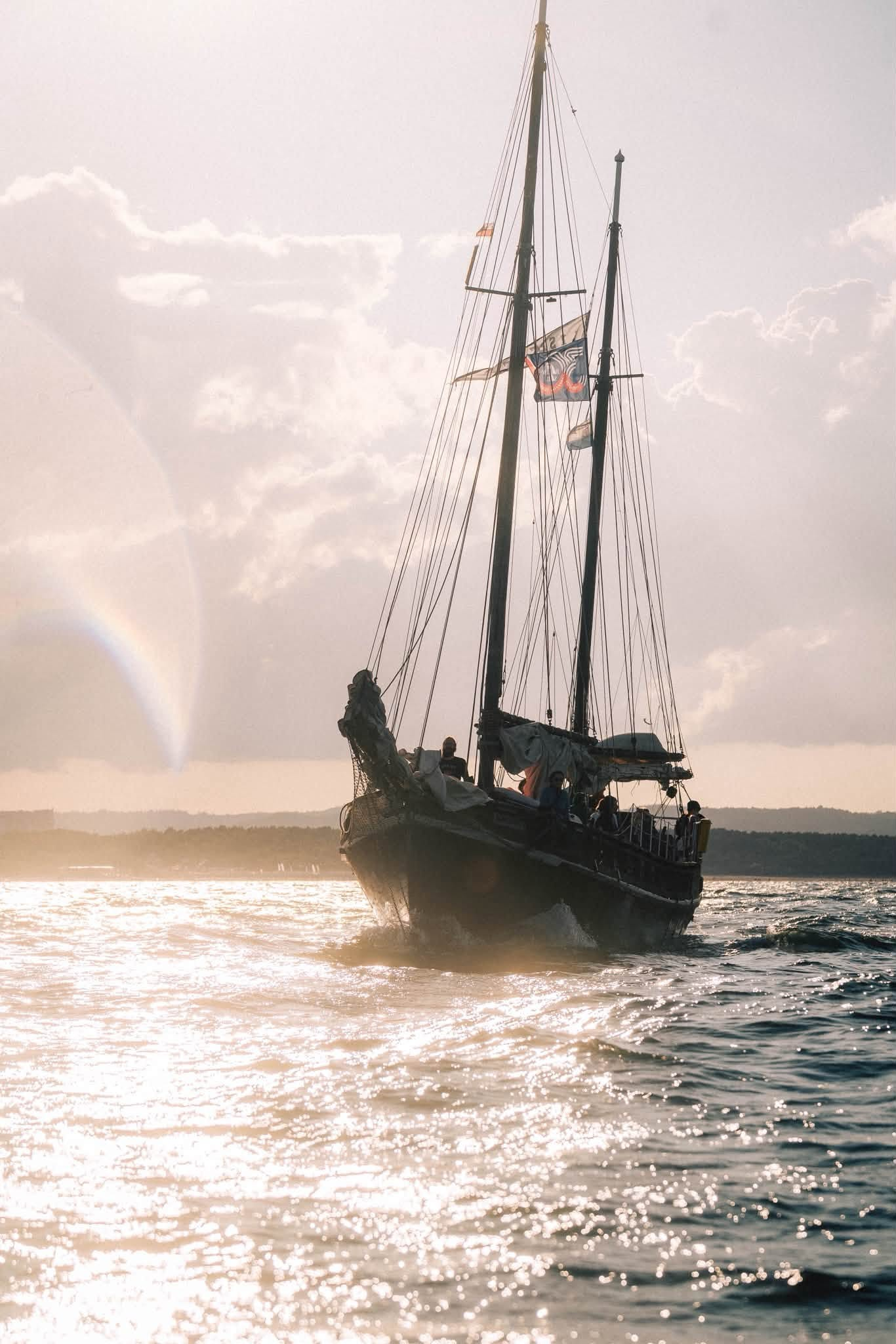
Most Baltic itineraries treat Gdańsk as a one day stop for amber shopping and the Solidarity museum. Time it right, though, and you land in the middle of one of the region's best-kept sailing secrets: four days each August when a fleet of century-old schooners, converted fishing cutters, and polar-expedition yachts takes over the city's waterfront.
A 30 Year Old Idea That Started Somewhere Else
The festival wasn't Gdańsk's idea originally. It traces back to a Rostock initiative in the mid-90s to link Baltic port cities through a shared circuit for traditional sailing vessels - a way to get tourists and locals alike reconnecting with the region's maritime past. Gdańsk joined the very first edition in 1997, a year that happened to coincide with the city's own millennium celebrations, giving the new festival an unusually grand launch pad. Each participating city kept its own event branding; Gdańsk's went through a name change or two before settling on Baltic Sail.
Two decades on, the festival's center of gravity shifted to Ołowianka Island, where a new pedestrian bridge finally tied the island to the Old Town waterfront — turning a scattered event into one continuous stretch of ships, stages, and food stalls along the Motława.
Meet the Fleet
The ships are what make the trip worthwhile, and this year's line-up read like a floating history syllabus.
The Dutch schooner Minerva - at 50.5 meters, the biggest thing on the water - spent decades as an unremarkable motor freighter before a 1980s restoration put her masts back up and handed her a new name (borrowed from the Amsterdam shipyard that rebuilt her). She was the only vessel dressed in evening lights, strung bow to stern.
Lithuania sent Brabander, a self-taught boatbuilder's passion project from the late 1970s that now moonlights as a research platform for marine biology and underwater archaeology students at Klaipėda University. Latvia's Libava looks like she sailed out of a 17th-century painting - carved lion figurehead, deep red sails - but she's barely twenty years old, built from a compensation payout after two fishermen decommissioned their old trawler.
Then there's the local hero: Generał Zaruski, a wooden gaff ketch built in Sweden in 1939, renamed twice under different political regimes, left to rot in the early 2000s, and finally rescued by the city of Gdańsk for the price of a modest apartment. She's been the flagship ever since.
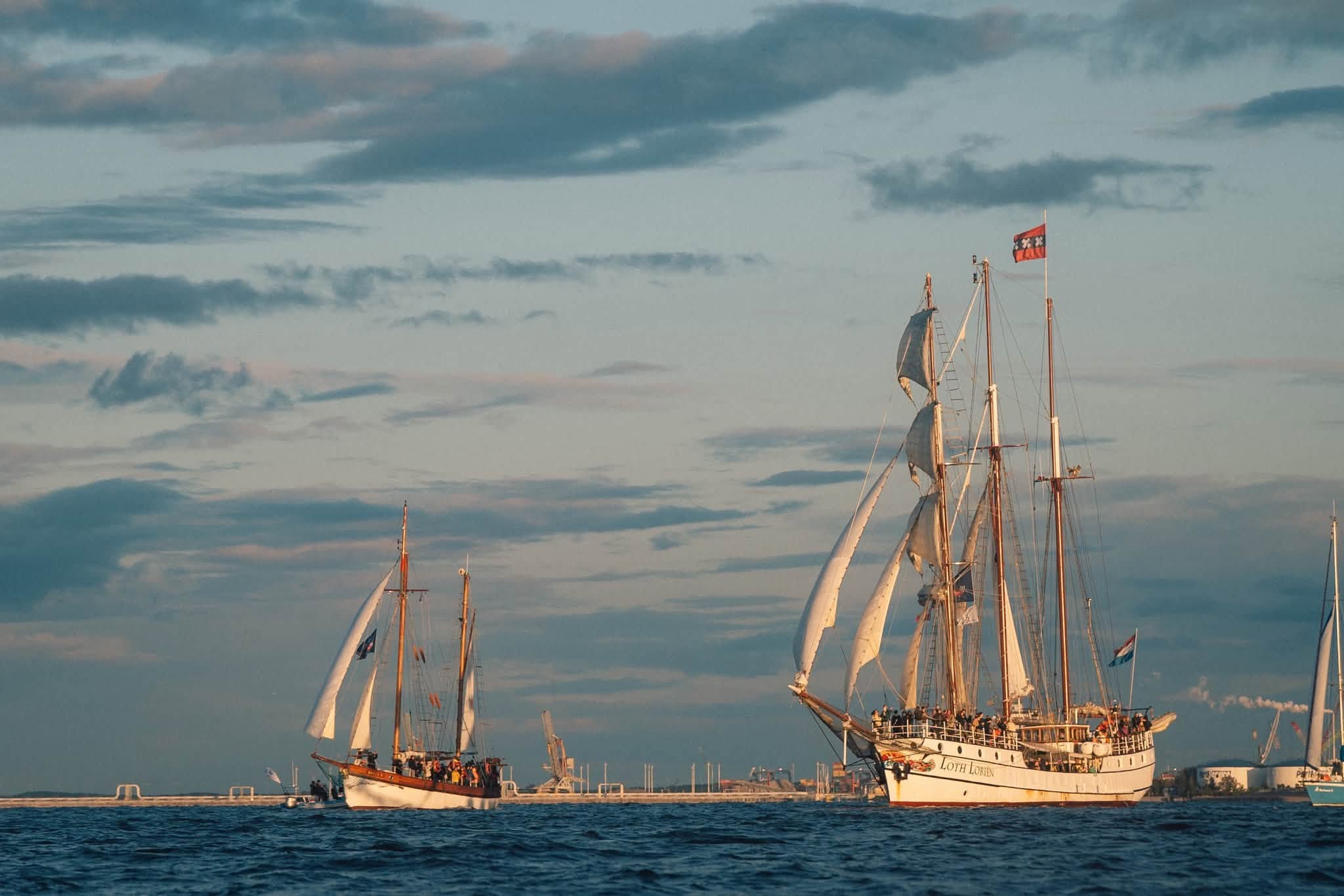
Rounding out the fleet: Loth Loriën (Dutch, Tolkien-inspired name), Bonawentura (a rebuilt fishing cutter that once hauled cod off Władysławowo), Germany's Ernestine, Finland's Joanna Saturna, Estonia's Lisette, and the record-setting polar yacht Barlovento II — built by Silesian miners with zero coastline in sight.\
Source:
The Anniversary Didn't Go Entirely to Plan
Here's the part worth knowing if you're planning around this festival specifically: weather doesn't always cooperate, even on milestone years. This year's 30th edition ran into a severe storm warning that forced organizers into an unprecedented call - cancelling the flagship Tall Ships Parade on Gdańsk Bay, something that had never happened in three decades of the event. Heavy rain and a strong northerly swell simply made it unsafe to send the fleet out.
The festival didn't fold, though. Once the weather cleared Saturday afternoon, the ships went back out for their regular bay cruises, and the shoreside program - shanty concerts, historical reenactors, a light-mapping show - ran as planned.
The Takeaway for Cruise Planning
If Baltic Sail is the reason you're timing a Gdańsk stop, build in a little slack. The core experience - walking the quay past ships with genuinely wild backstories - happens regardless of weather. The parade, the single most photogenic moment, is the one piece that's at the mercy of the forecast.