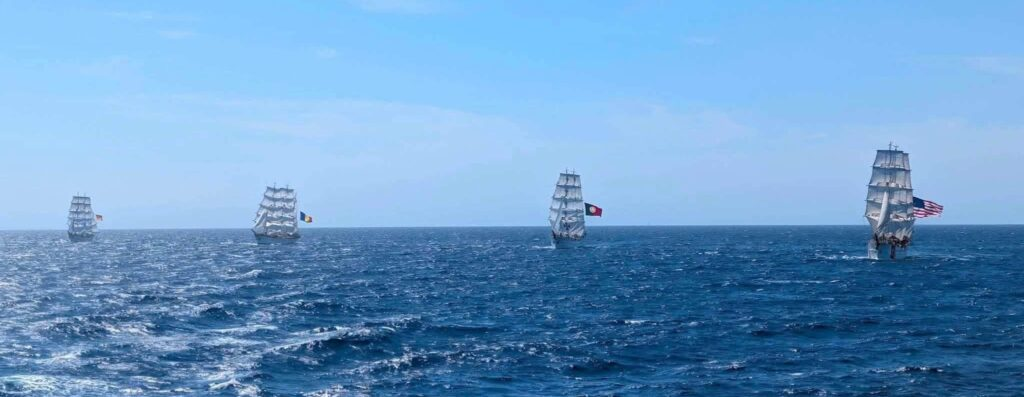
Fifty years is a long time to wait for a rematch. On 9 July 2026, four identical German-built training barques lined up off the coast of Cape Cod for only the second running of the Five Sisters Cup - arguably the rarest race in the tall ship calendar, held just twice since 1976. Once again, it was the German Navy's Gorch Fock that crossed the line first, keeping the trophy exactly where it has sat for half a century: on her own deck.
What Is the Five Sisters Cup?
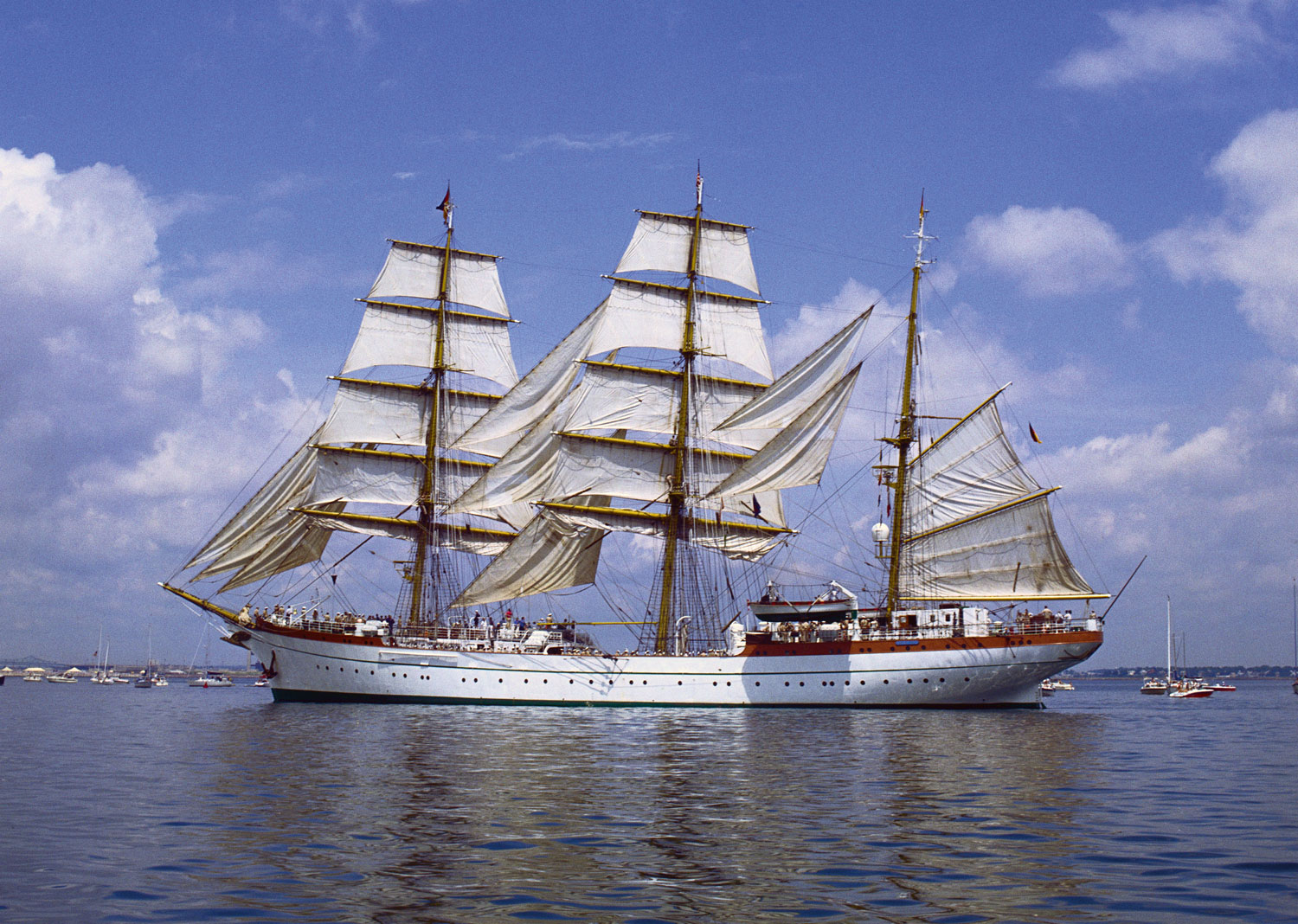
The Five Sisters Cup gets its name from a unique quirk of shipbuilding history: five nearly identical steel training barques, all built to the same design by the Blohm & Voss shipyard in Hamburg between the late 1930s and 1958. Despite sailing under different flags, the "five sisters" share the same hull lines, rig plan and general silhouette:
- Gorch Fock (Germany, 1958) - the newest of the five, and the only vessel to carry the class name itself.
- USCGC Eagle (United States) - originally launched as Horst Wessel for the German Navy before being handed over to the US as a war reparation.
- NRP Sagres (Portugal) - originally Albert Leo Schlageter.
- NS Mircea (Romania).
- Gorch Fock (1933), the original of the class - later transferred to the Soviet Union as Towarzysz, and eventually returned to Germany, where she is now permanently preserved as a museum ship in Stralsund.
Because these ships were scattered across different navies and training programmes for most of the 20th century, getting even a handful of them on the same start line at the same time is a genuine rarity - and getting all five together has happened exactly once.
1976: The Only Time All Five Sisters Raced Together
The story begins with Operation Sail '76, the tall ship gathering that marked the United States Bicentennial. As part of that celebration, a race was organised from Hamilton, Bermuda to Newport, Rhode Island - and by coincidence of scheduling, all five sister ships ended up on the same course at the same time, the only occasion in history this has happened.
To commemorate the moment, New York businessman Norman J. Mercer commissioned a trophy from Tiffany & Co. - the same jeweller behind other iconic sporting prizes such as the Vince Lombardi Trophy (Super Bowl), the Larry O'Brien Trophy (NBA championship) and the Commissioner's Trophy (World Series). The 1976 race itself was chaotic: several ships collided near the start line, and long stretches of calm eventually forced organisers to decide the result on corrected time. Through it all, Germany's Gorch Fock (the 1958 vessel) sailed her own race - starting clean, avoiding the pack, and picking the most direct course to Newport based on the available forecast. She won both on the water and on corrected time, and the crew collected the trophy in a ceremony in New York on 4 July 1976. It has remained aboard ever since, because a rematch of all five sisters was never organised again.
2026: Four Sisters Reunite for Sail250
Nearly exactly fifty years later, the stars aligned again - this time as part of Sail250, the series of events marking 250 years of American independence. Planning for a second Five Sisters race had been underway for close to two years, coordinated by the German Navy with logistical support from the Sail Boston organising committee. Only four ships could take part this time, since the fifth sister - the original Gorch Fock - has been a static museum exhibit in Stralsund for decades and is no longer capable of sailing competitively.
After finishing their part in the New York leg of Sail250, the four sisters - Gorch Fock, USCGC Eagle, NRP Sagres and NS Mircea - set out together on the roughly 400-nautical-mile passage from New York to Boston. The race itself covered a defined 60-nautical-mile stretch off Cape Cod, sailed under a fresh southwesterly breeze that built to more than 25 knots as the fleet worked upwind through the Cape Cod Precautionary Area.
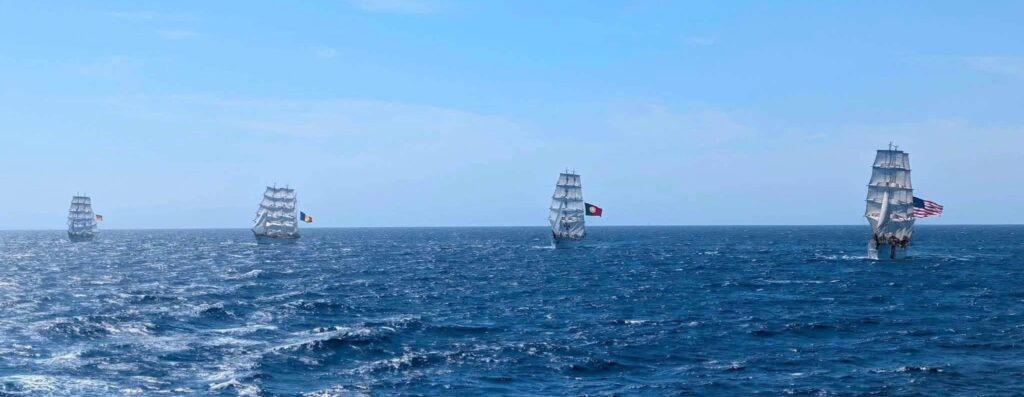
Source: Superyachts Chanel
Race Result: Gorch Fock Repeats Her 1976 Win
Under full sail and ideal racing conditions, Gorch Fock quickly opened a lead and never gave it up, averaging around 8 knots to complete the course in 7 hours and 27–30 minutes (reports vary slightly by source). USCGC Eagle crossed the line second, roughly 38 minutes behind, with Portugal's Sagres taking third and Romania's Mircea rounding out the fleet in fourth.
Commander Frigate Captain Elmar Bornkessel later explained that the German crew's edge came down to meticulous preparation rather than luck: extensive training beforehand, deliberately trimming excess weight off the ship, and shifting ballast to induce a slight leeward heel that improved her sailing performance in the breeze. It's a detail that underlines just how competitive modern sail training crews are, even aboard century-old ship designs built long before performance sailing was a science.
Following the finish, all four ships sailed into Boston Harbor together as part of the Parade of Sail opening the city's Sail250 festival, led by USCGC Eagle. The formal Five Sisters Cup presentation took place aboard Gorch Fock on Sunday, 12 July, with the commanding officers of all four vessels present as Captain Bornkessel lifted the Tiffany trophy for the second time in its history.
A Rivalry Built on Mutual Respect
What stood out as much as the result was the tone among the crews afterward. The commanding officer of Romania's Mircea wrote publicly that sailing alongside her sister ships had been an honour, signing off with "see you at sea." The US Coast Guard, for its part, offered the German crew a simple naval compliment: "Bravo Zulu" - sailor's shorthand for "well done." Bornkessel himself was quick to credit his whole crew rather than take individual credit for the win, calling it a result earned through the team's seamanship rather than any single decision.
When's the Next Five Sisters Cup?
Given that the gap between the first and second editions stretched to half a century, tall ship enthusiasts won't have to wait nearly as long for the next one. Organisers have already floated 2033 as a target date for a third running - timed to mark the 100th anniversary of the original 1933 Gorch Fock, the very ship whose class gave the race its name.
Why the Five Sisters Cup Matters Beyond the Trophy
Races like the Five Sisters Cup are a reminder of what makes tall ship sailing different from any other competitive sport: identical hulls built nearly a century apart, crewed by naval cadets from four different countries, racing not for prize money but for a silver cup that never actually changes hands. For anyone following the wider world of tall ships - whether from the dock, a spectator boat, or as a trainee crew member aboard a similar vessel - it's exactly this blend of history, national pride and old-fashioned seamanship that keeps events like this one worth watching.
FAQ: Five Sisters Cup
What ships are the "Five Sisters"? Gorch Fock (Germany, 1958), USCGC Eagle (USA, ex-Horst Wessel), NRP Sagres (Portugal, ex-Albert Leo Schlageter), NS Mircea (Romania), and the original 1933 Gorch Fock, now a museum ship in Stralsund under her former Soviet name Towarzysz.
When was the first Five Sisters Cup held? In 1976, during Operation Sail's Bermuda-to-Newport leg marking the US Bicentennial - the only time all five sister ships have ever raced together.
Who won the 2026 Five Sisters Cup? Germany's Gorch Fock, finishing the 60-nautical-mile Cape Cod course in roughly 7 hours 27–30 minutes, about 38 minutes ahead of USCGC Eagle.
Why did only four ships compete in 2026? The fifth sister, the original 1933 Gorch Fock, is permanently preserved as a museum ship in Stralsund and is no longer capable of sailing.
When is the next Five Sisters Cup? No date is confirmed, but 2033 has been mentioned as a possibility, marking the 100th anniversary of the first Gorch Fock's launch.